
Implied volatility surface
Model SenseIntelligence & Judgment
Models are math.
Risk is human.
Model Sense connects ALM modeling knowledge to practical use: a practitioner book, an interactive modeling lab, and a deposit-modeling masterclass for the bank treasury and risk teams who build, validate, and defend these models.
01About
Chih Chen
Creator, Model Sense · ALM modeling practitioner
LinkedIn profileModels are tools, not oracles. They can be useful without being precise or accurate all the time.
Built on one premise.
Model Sense exists on a single premise: that models are tools, not oracles. They can be useful without being precise or accurate all the time, and knowing the difference between a model that is useful and one that is merely elaborate is the central discipline of responsible ALM practice.
The practice was founded to fill a gap in how ALM modeling knowledge is transmitted. The textbook treatments are either too theoretical for practitioners or too product-specific to be portable. The practitioner who built something useful rarely has time to explain it at length, and the explanation is usually compressed into a conference slide. Model Sense is an attempt to slow that down: to take the behavioral models that actually drive bank balance sheet risk, work through the mechanics honestly, and teach them in a way that transfers across institutions, regulators, and rate environments.
The vehicles are a forthcoming book with Palgrave Macmillan, hands-on training for practitioners who need to build or defend these models, and a browser-based ALM Model Lab that makes the mechanics visible without a vendor black box. The thread across all of them is the same: intellectual honesty, fit-for-purpose thinking, and the practitioner's obligation to know what a model cannot do.
02The Book
Practical ALM
Behavioral Modeling
How Deposit Behavior, Interest Rate Risk, and Liquidity Shape Bank Balance Sheets
Under contract with Palgrave Macmillan, with the manuscript due in January 2027. The book teaches the principles of ALM modeling and how behavioral models connect to the measurements they feed: gap, funds transfer pricing, replicating portfolios, EVE, NII, and survival horizon.
The organizing thesis is George Box: all models are wrong, but some are useful. Every chapter approaches its model class from a risk-aware perspective, pairing the conceptual framework with hands-on mechanics. A single running example, a digital bank named AI First Bank, carries the reader from first principles through model governance. The recurring anchor is the 2023 bank failures, where deposit behavior and interest rate risk converged in a way that made transparent, fit-for-purpose models matter more than elegant ones.
- Publisher
- Palgrave Macmillan, under contract
- Manuscript
- Due January 2027
- Running example
- AI First Bank, from first principles to model governance
- Written for
- ALM analysts, treasury, and risk teams
Chih Chen
Practical ALM Behavioral Modeling
How Deposit Behavior, Interest Rate Risk, and Liquidity Shape Bank Balance Sheets
palgrave
macmillan
Yield curves through time

03Interactive
ALM Model Lab
A browser-based modeling lab. It bootstraps the SOFR curve, fits SABR to the cap-vol surface, calibrates Hull-White and BGM/LMM rate models, runs Monte Carlo simulation, and drives calibrated deposit, CD, and mortgage behavioral models through the ALM analytics that connect rates to the balance sheet. No install, no vendor black box; the assumptions are explicit and the mechanics are visible.
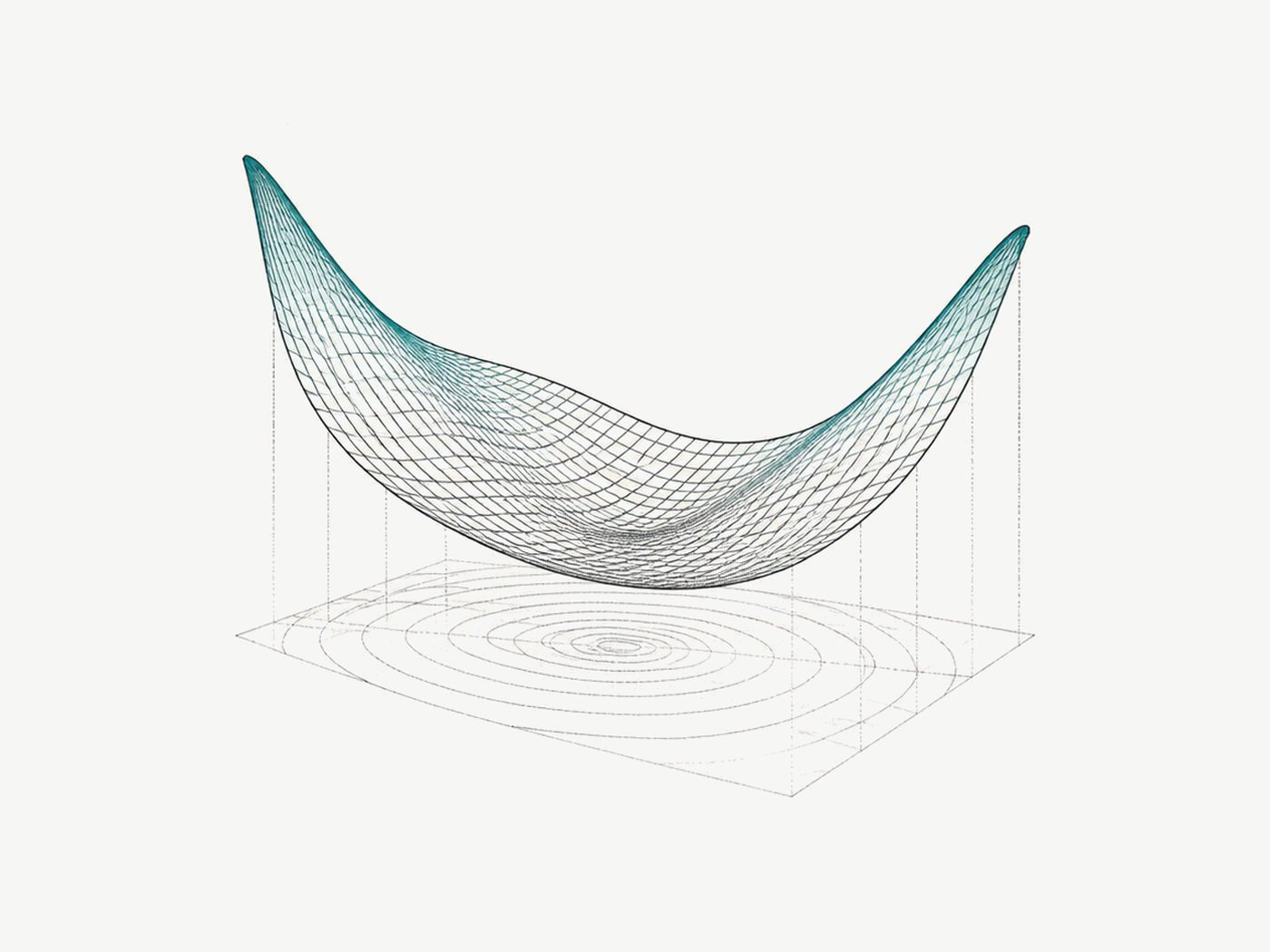
SABR implied volatility surface
Rate models
Bootstrap the SOFR curve. Fit SABR to the cap-vol smile; calibrate Hull-White 1F and BGM/LMM to cap and swaption surfaces. Simulate forward paths with Monte Carlo.
Behavioral models
A calibrated behavioral suite: competing-risks mortgage prepayment and default, demand-deposit and money-market decay, and CD early redemption. Each model switches between its calibrated form and a classroom form, so the mechanics stay visible.
ALM analytics
Repricing gap, liquidity gap, funds transfer pricing, stochastic replicating-portfolio optimization, and the Sensitivity-Equivalent Gap that bridges behavior to risk measures.
Instruments
Fixed and floating loans, mortgages, demand and money-market deposit books, a CD book, and the cash-flow engine they share across every analytic.
→On the roadmap
AI First Bank mini-ALM engine
The book's running balance sheet, modeled end to end inside the Lab.
Balance-sheet optimization
A portfolio optimizer connecting balance sheet composition to repricing gap, NII sensitivity, and EVE targets.
Open the Lab and run a model.
Calibrate to the bundled quarter-end market snapshot, simulate a rate path, and watch a deposit book decay against it. Built as the book's companion playground.
04Live training
Deposit Modeling
for Bank ALM
A focused program on building deposit behavioral models that hold up in practice: non-maturity deposit decay, dynamic rate-sensitive betas, the separation of surge from core, and the link from deposit behavior to net interest income and economic value of equity. Built for treasury and risk professionals who need models they can defend to an examiner and to an ALCO.
- Format
- Live virtual training
- Date
- Forthcoming
- Written for
- Treasury and risk teams
→What it covers
- Non-maturity deposit decay and component-based attrition
- Dynamic, rate-sensitive deposit betas (the S-curve)
- Surge versus core, and the false-precision trap
- From deposit behavior to NII and EVE
- Model validation and what an examiner looks for
Deposit survival by account age

05Research & writing
Published work
Selected research on deposit behavior, interest rate risk, and the bridge from repricing gaps to risk measures.
Developing an account-level mortgage prepayment model with an agentic AI team
Methodology, calibration, and the case for human validation: a competing-risks prepayment and default model built on public Freddie Mac loan-level data. ReadDynamic Deposit Betas: An Asymmetric Volatility-Adjusted S-Curve Framework for MMDA Rate Sensitivity
An asymmetric S-curve model for estimating MMDA deposit betas, incorporating volatility adjustment to capture rate-environment-dependent pass-through dynamics. ReadBeyond Static Bifurcation: A Regime-Aware Approach to Nonmaturity Deposit Modeling
A regime-conditional framework for nonmaturity deposit modeling that moves beyond fixed core/transactional splits toward rate-environment-aware segmentation. ReadDynamic Deposit Behaviours in IRRBB: Enhancing Risk Management through Sensitivity Analysis
Examines how deposit behavioral assumptions propagate into IRRBB sensitivity metrics and quantifies the effect on EVE and NII risk measures. ReadA Component-Based Model for Non-Maturity Deposit Decay Incorporating Interest Rate and Credit Spread Sensitivity
Decomposes NMD decay into interest rate and credit spread components, enabling more granular behavioral modeling of deposit runoff under stress. ReadThe Impact of Deposit Modeling on Interest Rate Risk in the Banking Book (IRRBB) Sensitivity Metrics: A Worked Illustration
A worked illustration of how deposit modeling choices flow through to EVE and NII sensitivity outputs under standard IRRBB shock scenarios. Read06Get in touch
Let's talk models.
For the book waitlist, masterclass registration, or a question about the ALM Model Lab, send a note.
Email Model Sense